
Just Write Communications
  • Home
  • Contact Us
  • News
  • Clients
  • Testimonials
  • Writing Tips
  • Weekly Chuckle
  • Meals We Steal
  • Bad Golf

Get Rid of that Sentence

6/18/2016

0 Comments

 
Picture
​Sometimes when you edit what you wrote, the best solution to simplify the message is to eliminate sentences. If a phrase doesn’t make sense, cut it. If something is confusing, hit the “delete” button. This will tighten up your communication.
 
As you put words on paper or type them on your laptop or desk top computer, everything seems important. Words flow. They make sense to you. You feel good.
 
Stop when you are finished and read over what you wrote. Quite frequently you’ll find something that is overly complicated or unnecessary. If it’s a point you need to hammer home, you may need to rework it. But often you will find it’s possible to cut the entire sentence and not miss a beat in your communication.

As you read over your document, you will find useless sentences. They don’t add value or they serve to obfuscate your main points. Eliminate them.
 
Far too often, writers try to fix the sentence. We spend too much time doing that. Cut the whole thing out. You’ll be happier. You’ll get done more quickly. And, quite frankly, you won’t miss the dang thing, and neither will your readers.
0 Comments

Drawn to Words in the High School Yearbook

5/21/2016

0 Comments

 
Picture
​Looking at our younger daughter’s high school yearbook last night, I was drawn to the words, not the pictures. I’m an anomaly, certainly, but there are still people like me in the world who look at “what” is being said to see if it’s original, worthwhile or interesting as opposed to just glancing at pictures or skimming a few lines.
 
There were many repetitive phrases in write-ups of the students in the yearbook, and I quickly stopped reading each of those. The ones with a unique tone or message kept my attention. That’s a simple equation to consider that helps your writing: Stay away from clichés; think about what you have to say that stands out; write it in your own words, not someone else’s.
 
Several of the accolades for the seniors used the phrase, “she is beautiful inside and out.” On the face of it, there is nothing wrong with that line, and it’s nice. But it’s also a stereotype (did anyone write “he is beautiful inside and out?”). Witness that the exact phrase was used at least three times and you see it’s nothing new.

Writing is work, and you can’t expect everyone putting something into words for a high school yearbook to be a pro writer. But in a business environment, you should guide yourself by remembering that many people are drawn to your words, not just the pictures, charts or graphs. Make what you say meaningful. Take extra time to craft it using examples that speak directly to your case and illuminate your points in ways that resonate with the reader.
 
If you follow these tips, more will read what you wrote, and once you capture their attention, they will be far more likely to read it thoroughly.

0 Comments

Eliminate Excess Information

5/14/2016

0 Comments

 
Picture
​At a communications training session a few weeks ago, the presenter stated the following: “Eliminate excess information. Make your writing elegant and add emotion.”

If we took what he said to heart, this column would end here. But I need to write a few more words, so I’ll elaborate.
 
Often we write too much. We go on and on, well past the time we lose our reader. I remember working for U.S. Department of Energy close to 20 years ago and a higher-up sought my help with a memo. She wrote a directive for her field staff. It was three pages long, laced with acronyms and it took a detective to decipher her message. She knew it was bad and asked for my help editing and cleaning it up.
 
I walked back to my office, chopped it down, eliminated excess information and redundancies, activated some verbs, added some appropriate adjectives, then strolled back to her cave with a one-pager. I handed it to her. She looked at me after reading it quickly, and said, “HOW DID YOU DO THIS?” 
 
“It’s my job,” I replied. That’s what writers get paid to do: Make sense of things. Focus on what’s important. Write elegantly and add emotion.
 
It’s not easy, so if you struggle taking apart dense language, seek out the writer on your staff or hire someone from the outside. It will help you get your messages across to your audience far more effectively than a three-page gobbly gook memo that makes your eyes glass over.

0 Comments

Take a Stand

5/7/2016

0 Comments

 
0 Comments

Three All-Stars on your Team

4/30/2016

0 Comments

 
Picture
​If you watch the National Basketball Association (NBA), it’s striking how championship teams require three all-stars, and one of the players needs to be transcendent.  Most recently that star has been Stephen Curry. LeBron James is right there. Kobe Bryant preceded them. And Michael Jordan, Magic Johnson and Larry Bird dominated the 1980s and 1990s.
 
They were/are the big names, the HUGE stars, but they couldn’t/can’t do it without at least one other all-star (check those rosters on Google) and preferably two. What does that say? My read is that to have a championship team, you need the top leader, but at least two other people on your staff who know exactly what to do, when to do it, and how to fill that role successfully.  Those are the Klay Thompson’s, the Scottie Pippen’s and the James Worthy’s.
 
If you’re a CEO brought into change culture, direction, product mix, technology, profit margins, growth, you can’t do it yourself. It’s never going to happen. If you don’t have several other staff on board with you AND who are VERY TALENTED, all your leadership skills will go for naught. You’ll be frustrated, burn yourself out, and pound your head on the wall. You need those two other all-stars (and more).

But, if you bring two other thoroughbreds on board with you or you find them when you step into a new leadership role, you must get them aligned with your direction and fully utilize all their skills in the most effective way possible. If one is an operations guru, cut her loose to do her thing and get it done. If one is the IT pro, get him humming in that direction. Use their skills, give them the big picture, empower them, and let them lead.
 
Find those people. Nurture them, keep them informed, and use their talents. Don’t neglect your writing and communication. Stay on message. Make sure they do, too. Taking any company in a new direction is extremely hard work. You need the elite player and two other stars, and you need to knit your messaging together through quality writing and interpersonal communication. Talent alone is never enough.

0 Comments

Teach Others to Increase Message Retention

4/23/2016

0 Comments

 
Picture
​If you sit through business meetings, presentations or lectures, you recognize that afterwards not much is retained unless you took notes and referred back to them. If you hark back to your high school or college days, listening to teachers/professors, the same principle applied: A lot went in one ear and out the other.
 
Part of the human learning process involves cutting out unnecessary or complex information. We need to make information elegant and add emotion, while eliminating excess and complexity. The message becomes more tangible to us then, and we own it.
 
Taking ownership of a new business plan or sales pitch requires this simplification process. To succeed in transmitting these types of messages to others, you can’t solely talk it over with your staff or a potential customer and expect them to get it. If you explain a business plan to 10 employees, you’ll get 10 slightly different perspectives on what it means.
 
The best way to create a message retention model is to have your people take on the teaching themselves. Create the pitch. Then have them test it on their team or potential clients.  Critique the effort. Provide feedback. Reinforce key points.
 
I attended a communications course recently, and one of the points stressed is how little we retain from a presentation. The GREATEST MESSAGE RETENTION PERCENTAGE occurred when those hearing the information then went on to teach it to others. They owned it. They bought into it. They LEARNED it because they taught it. Consider this approach next time you need to deliver significant information to your organization.
 
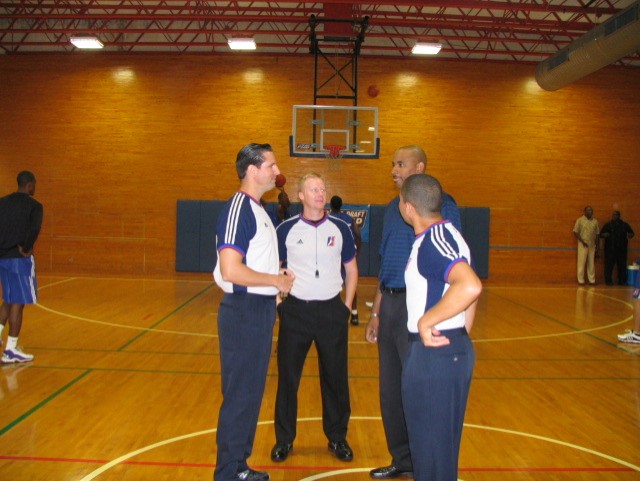
During that recent course, the presenter reported data that there is a 90 percent retention rate of core messages when the individual goes on to teach the material him or herself. I used to referee high school and college basketball, and attended many learning clinics. I mentored (and continue to mentor) other officials. I found that I most successfully incorporated key training tips, points of emphasis and rules when I owned the material and explained it to others.
 
Similarly, when I gave speeches on Y2K, renewable energy, nuclear power and our nation’s electric grid, I found I learned by doing. I absorbed the information because I was teaching others through those speeches.
 
Consider this approach for your team. If you have important information and it is complex, have them study the material and audience to deliver the most needed points in easily digestible and tangible ways. Then let them carry your water and explain it to others. Monitor how they do, so the statements are consistent. If you operate in a complex industry or have a large employee base, this approach will create far greater buy-in than you probably had on previous initiatives. Try it.

0 Comments

When You Get an Idea

4/16/2016

0 Comments

 
Picture
What do you do when you get a creative idea to solve a problem? Do you start thinking about it, shaping it in your mind, massaging the solution in different ways to see where it would take you? I do. The mind does strange things. You fantasize, hope, project, and build. Suddenly you are far away from your initial thought.

This is good. It’s also how the mind operates. How do you capture those important ideas without losing your core concept? Do you let important thoughts evaporate? Do you write them down? If you don’t write them down, you should.
 
There are many ways to capture your creative impulse when you mind goes into problem-solving mode, but one of the best is the old fashioned way of taking notes. First, putting pen to paper (or finger to keyboard or fingertip to smart phone) forces you to summarize and capture the key points. You can’t write EVERYTHING down your mind is thinking because the brain impulses are far too vast. So write down the 3-5 main points in your thought process. You can go back later and refine it. Having it down on paper or your computer screen or smart phone will jog your memory and get you editing, adding and subtracting when the time is right. The important thing is to commit your initial thoughts.
 
Second, writing your idea down commits you to it. The idea gains importance through the process of putting it in words. That means you are far more likely to do something with it.
 
Third, you establish a blueprint when you write your idea down. The process of writing forces you to think through what you are going to do with the idea. That germinates the seed for a more thorough plan, establishing a path for you and your business to follow.
 
Write your ideas down. Keep them short. Go from Point A to Point B and put down what the end point is, and how you’ll get there. You’ll be far more likely to get there if you have it down on paper. Don’t just think about it, write it!

0 Comments

Leverage Your Expertise

4/9/2016

0 Comments

 
Picture
​If you are a subject matter expert, developing your writing skills will help leverage your expertise to create greater visibility. That can build your career, grow your business and enhance the bottom line.
 
If you have a high level technical background, it’s easy to get lackadaisical and just expect people to know that you have all that knowledge. But, having the knowledge isn’t enough. It must be shared. Otherwise, you live in a vacuum.
 
Think about it: Freddie Frabnats is a genius nuclear engineer and someone comes up to you with an idea of Freddie’s, and asks, “Hey, have you heard what Freddie’s trying to do?” Your answer will likely be “no,” because Freddie hasn’t communicated it.
 
So it’s tremendously important for subject matter experts to explain their ideas to others. If you can’t write clearly about what you do, take writing lessons. Hire a writer to help you – s/he will listen to what you have to say, then capture the key points so others can understand the concept.
 
If you don’t write about what you do, others will never know what great technology, idea or invention you developed. Write about it. Your next speaking engagement is waiting.

0 Comments

Complexity

4/2/2016

0 Comments

 
Picture
​Let’s face it: Most of us are confused by science and technology. Because innovations hammer us daily, we can’t keep up. Many people shut their minds to new information because of this.  How should a writer cut through the complexity?
 
When you take on a hard-to-understand topic like the equipment used in a nuclear power plant, your first goal is to develop a rudimentary understanding of the facility and its workings. Ask questions, take notes, summarize, clarify what you don’t know. Get the information down on paper in a format that you understand. That’s the first step – giving you the ability to now translate for others.
 
I often call my job that of a “translator.” The talented writer is finding a subject and sharing it with an audience so others understand what you wrote. From there, you dig deeper and may want to persuade your readership on an issue or raise a cause for action. Regardless, the first step is writing so others understand you, and that requires you understand the material yourself.
 
Highly complex material like information technology systems, nuclear power or toxic chemicals can make your eyes glaze over. Find the core of what you need to communicate first. Write your message down. State complicated terms as simply as possible and use language that a general audience understands. Don’t over-write. Go back and read what you wrote, and ask yourself the question: “Will this makes sense to the Average Joe?”
 
If not, head back to the starting gate. Your goal is translating complex material into building blocks so others understand and take action. Keep that in mind as guidance, and your ability to share science, technology and other complicated issues of the day will grow.

0 Comments

The Little Notebook

3/26/2016

0 Comments

 
Picture
​Years ago as a reporter in Washington, D.C., I watched the New York Times reporter covering issues before Congress and noticed how few notes he took. He used a small flip pad, and jotted down a couple of things on each page. I wondered how he got the story right, but the next day when the newspaper came out, he always captured the main points and wrote the article from an accurate perspective.
 
Taking solid notes is tremendously important to writing a thorough story that best reflects reality. It’s hard to do. When you take fewer notes during an interview, it’s logical that would detract from the final product.

But, as I’ve gotten older, I’ve come to adhere to the “smaller notepad” perspective. I have a standing joke with a friend about bringing a tiny notepad with me wherever I go. Someone blabbing away says something noteworthy and I write it down. A unique web site is mentioned and I want to check it out, so I scribble it on paper for future reference.  And so on.
 
The tiny notebook fits in my pocket. If I wear a sports jacket, it slides right in. It’s handy. It gives me confidence that I won’t miss something.
 
If you look for new ideas or want to remember something important later, carry a little notepad around. You can frame your next story, save an idea, awaken yourself to a perspective you hadn’t considered. Write it down and make sure to read it when you get back to your office.

0 Comments
<<Previous

    Writing Tips

    This blog provides writing tips for business leaders.  We also offer one-on-one writing and group training sessions, editing and other writing services.

    Archives

    June 2016
    May 2016
    April 2016
    March 2016
    February 2016
    January 2016
    December 2015
    November 2015
    October 2015
    September 2015
    August 2015
    July 2015
    June 2015
    May 2015
    April 2015
    March 2015
    February 2015
    January 2015
    December 2014

Proudly powered by Weebly